
Meet the Boss: Addis Alemayehou, managing partner, 251 Communications, Ethiopia

‘Meet the Boss’ is a How we made it in Africa interview series where we pose 10 questions to business leaders across the continent.
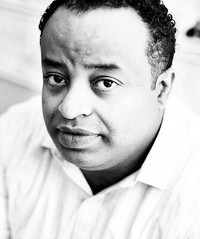
Addis Alemayehou
Addis Alemayehou
Addis Alemayehou, managing partner, 251 Communications, Ethiopia
1. What was your first job?
Room service in a hotel.
2. What parts of your job keep you awake at night?
Working capital.
3. Who has had the biggest impact on your career?
My sister. Because she has always achieved every goal that she set for herself.
4. The best professional advice you’ve ever received?
Just go for it – life is too short.
5. The top reasons why you have been successful in business?
Being very attentive to clients, and respecting the consumer.
6. What’s the best place to prepare for leadership? Business school or on the job?
On the job.
7. How do you relax?
My children.
8. By what time in the morning do you like to be at your desk?
7am
9. Your favourite job interview question?
Where do you see yourself in five years?
10. What is your message to Africa’s aspiring business leaders and entrepreneurs?
It is our time.
Addis Alemayehou is managing partner of Ethiopian-based advertising agency 251 Communications. He also sits on the boards of the African Leadership Network and the Ethiopian American Business Forum.

Comments

Popular posts from this blog

Mohammed Dewji: A Made in Africa success story

Mohammed Dewji has built his family business from a $26m  trading and distribution company importing goods into Tanzania  into a manufacturer of multiple products and one of Africa’s few companies with revenues of over $1bn. His next target is to generate $5bn of revenues by 2020 and employ 100,000 people across Africa. Dewji is unassuming and doesn’t seek the limelight. However, this quiet demeanour should not fool you. Dewji is direct and to the point. He was voted Business Leader of the Year at the African Business Awards in 2015 and headed the Institut Choiseul’s list of leading young African economic leaders in 2016. As one tracks his career it is obvious to see why. His major feat has been to oversee generational change in the family business and, along with this, its complete transformation, growing its revenues from $26m in 1999 to over $1.5bn last year. He acknowledges the head start he received from being born a Dewji. The family business was very succes...

Building a profitable green economy in Africa

Viewed from a dramatic granite formation jutting above the town, the central Ugandan settlement of Soroti doesn’t amount to much. A series of low-rise rectangular buildings, drifting off into a featureless hinterland, it appears a regional administrative and commercial centre of little importance. Yet in December, European Union and Ugandan diplomats, wielding commemorative spears and greeted by brightly attired locals, gathered to cut the ribbon on a development that could put this backwater firmly on the map. Soroti’s vast solar plant is the largest of its kind in  East Africa , a sprawling site of over 32,000 photovoltaic panels that will add an initial 10MW of electricity generating capacity to the local area. Backed by development funds from European taxpayers and foreign private capital, the $19m project aims to power up to 40,000 homes, schools and hospitals, while kick-starting regional economic growth and delivering profits to its commercial backers. It is on...

How a summer job became my business — Gray

Dr. Farrah Gray, an American businessman, author and motivational speaker, began his entrepreneurial journey at the age of six and became a millionaire at 14. He shares the success story with MAUREEN AZUH What inspired you into the business enterprise at the age of six? I am somebody that likes to accomplish goals having been poor. I was uncomfortable, my family was uncomfortable. I wanted us to live a better life and I knew it was possible because other people on television were living amazing lives. I saw that disconnect between our reality and television, so I started trying to help my family. I started selling hand-painted rocks on the street that was my first business. I got one idea and another and yet another and I continued because I saw that was my ticket out of poverty. So that was my reason of motivation most probably. Now that you have success, what drives you? Being able to give back to my foundation, the Farrah Gray Foundation, which represents my perso...